
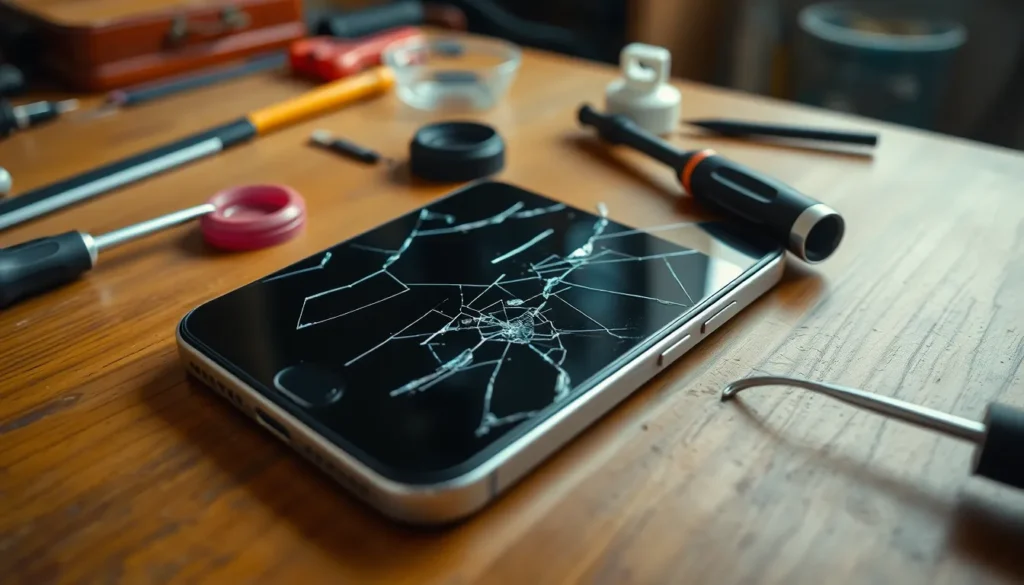
Cracked iPhone screens are like that one uninvited guest at a party—awkward and impossible to ignore. Whether it’s a tiny spider web fracture or a full-on shattered disaster, the sight of a broken screen can make anyone cringe. But before you start contemplating a life without your trusty device, let’s talk about what it really costs to get that screen fixed.
Understanding iPhone Screen Repairs
iPhone screen repairs involve costs that vary based on several factors. Knowing the common causes of screen damage and recognizing repair signs can help in making informed decisions.
Common Reasons for Screen Damage
Falling onto a hard surface typically causes cracks or shattered screens. Excessive pressure from sitting on the device also leads to physical damage. Moisture can seep into internal components, resulting in screen malfunction. Poor-quality accessories may cause misalignment, contributing to screen issues. Frequent drops across surfaces add to wear and tear, affecting durability.
Signs That Your Screen Needs Repair
Cracks or significant scratches on the screen signal the need for immediate attention. Unresponsive touch areas can hinder navigation and functionality. Visible discoloration or lines across the display indicate underlying issues. Flickering screens disrupt user experience and must be evaluated. If the device frequently freezes or crashes, repairs might be necessary to restore normal performance.
Cost Factors for iPhone Screen Repairs

Several factors influence the cost of repairing an iPhone screen. Understanding these elements helps users make informed decisions when facing screen damage.
Brand Model Differences
Different iPhone models affect repair costs significantly. Older models, like the iPhone 7, generally have lower repair costs ranging from $80 to $150. In contrast, newer models, including the iPhone 14, can incur charges of $200 or more due to advanced technology and display materials. Repair technicians often consider the availability of parts, which impacts pricing as well. Hence, model variations can lead to substantial differences in service expenses.
Repair Type: OEM vs. Aftermarket
Choosing between OEM and aftermarket parts plays a crucial role in repair costs. OEM (Original Equipment Manufacturer) parts typically come at a higher price, ranging from $200 to $300 or more, ensuring quality and warranty protection. On the other hand, aftermarket parts may lower repair bills to around $100 to $150, but they sometimes lack durability and performance compared to OEM options. Selecting the right type hinges on balancing cost and device reliability while also considering personal preferences.
Where to Get Your iPhone Screen Fixed
Several options exist for fixing an iPhone screen, catering to varied needs and budgets.
Authorized Service Centers
Authorized service centers provide high-quality repairs using original equipment manufacturer (OEM) parts. Prices for repairs at these centers typically range from $200 to $300. Technicians at these facilities undergo specific training to handle Apple products, ensuring expert service. Customers benefit from manufacturer warranties, covering additional issues after repairs. Availability of service may vary by location, necessitating appointments for quicker assistance. Many users prefer these centers for peace of mind, knowing their device gets serviced by professionals.
Independent Repair Shops
Independent repair shops offer competitive pricing and often quicker service than authorized centers. Repair costs might range from $100 to $150, depending on the shop and the parts used. These shops typically use aftermarket components, which can be less expensive but may compromise quality. Technicians often have extensive experience with various iPhone models, providing efficient solutions. Some independent repair businesses even offer warranties on repairs, enhancing customer confidence. For those seeking cost-effective alternatives, these shops present a viable option without sacrificing too much quality.
Additional Costs to Consider
Understanding additional costs helps in budgeting for an iPhone screen repair. Several extra factors may impact the final expense, so it’s essential to remain informed.
Hidden Fees in Repairs
Hidden fees can inflate the total repair cost unexpectedly. Many repair shops may charge diagnostic fees for assessing the damage, which typically ranges from $20 to $50. Some establishments impose additional charges for labor or emergency service, depending on the complexity of the repair. It’s wise to inquire about all potential fees upfront to avoid surprises. Customers may also face costs related to shipping if they choose mail-in services, particularly when sending devices to specialized centers. Confirming these details before committing to any repair service safeguards against unforeseen expenses.
Warranty Implications
Warranty implications should influence repair decisions. If the iPhone still falls under warranty, unauthorized repairs could void the coverage. Apple’s warranty includes screen damage under specific conditions, but misuse or damage from third-party components may disqualify it. Repair options utilizing OEM parts often preserve warranties, ensuring that device value remains intact. Authorized service centers provide repairs ensuring compliant practices, while independent shops may or may not preserve warranty status. Users must weigh the cost of repairs against potential warranty complications when selecting service options.
Repairing an iPhone screen can range widely in cost depending on the model and repair options chosen. Users must weigh the benefits of OEM parts against the savings of aftermarket components. While authorized service centers provide quality assurance and warranty protection, independent shops often offer quicker and more budget-friendly solutions.
Understanding potential hidden fees and warranty implications is crucial for making informed decisions. By evaluating the extent of the damage and considering all available options, individuals can find the right balance between cost and quality. Ultimately, addressing screen damage promptly not only restores functionality but also enhances the overall user experience.


